The Donner Starrypad MIDI controller review centers on a pad-first controller for triggering drums, samples, and effects, with extra controls for shaping a DAW workflow.
Donner STARRYPAD Review Summary
The quick verdict
400+ ratings
Read Amazon ReviewsDonner STARRYPAD
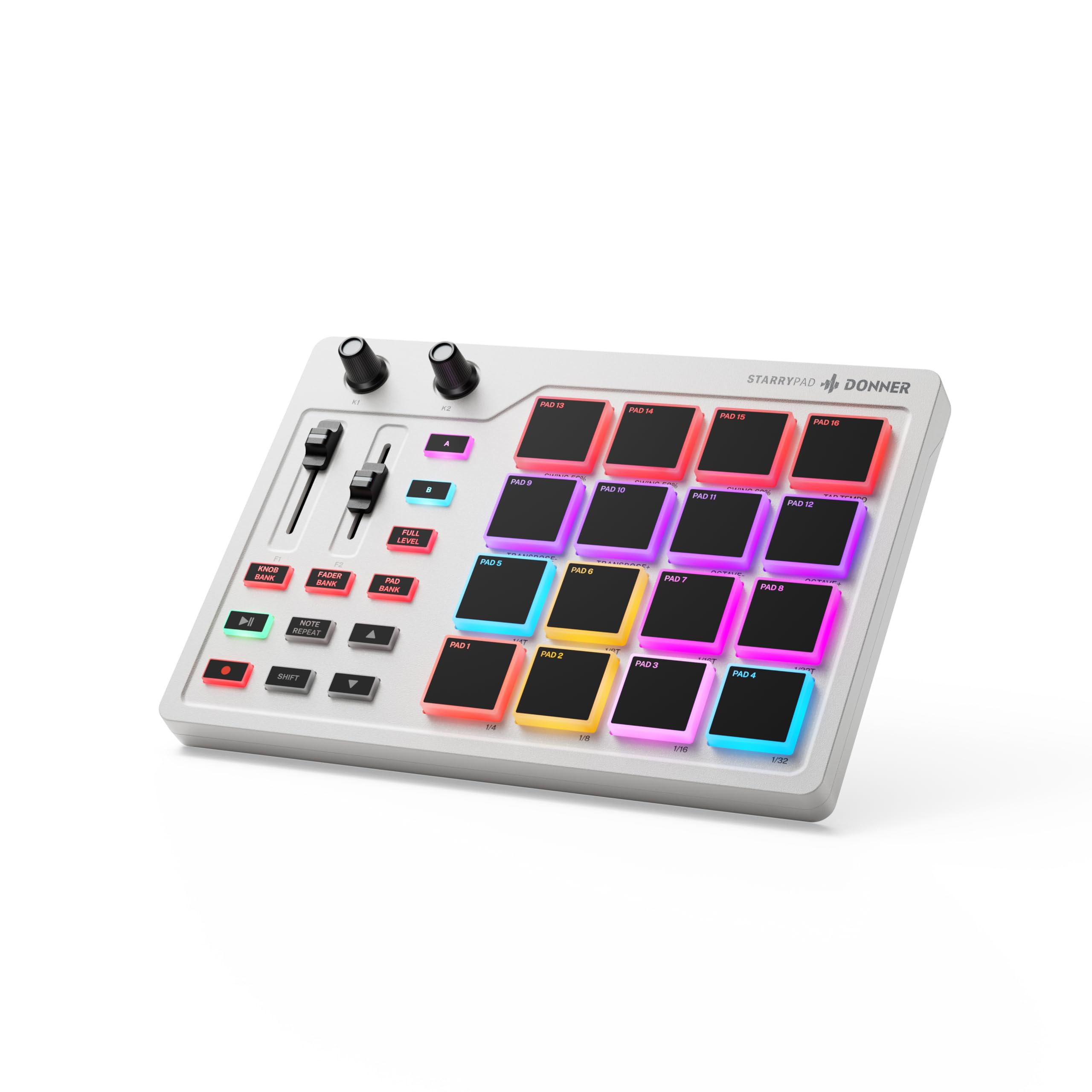
A pad-focused MIDI controller for producers who want assignable triggers, hands-on controls, and a DAW-based workflow.
- Sixteen soft silicone backlit pads trigger drums, samples, effects, and more.
- Three switchable pad banks provide 48 assignable pads.
- Adjustable velocity sensitivity curves tailor pad response.
- Two faders, two knobs, three buttons, and a Shift key add customizable control layers.

Pros
- Dedicated pads are designed to trigger drums, samples, and effects.
- Multiple pad banks expand assignment options without requiring a larger pad surface.
Consider before buying
- It needs DAW software to produce sound, so it cannot serve as a standalone drum machine.
- Pad colors are set through software, adding a setup step for users who want customized visual grouping.
Read the full review summary
The Donner STARRYPAD suits beat makers who want a dedicated surface for playing drum hits, samples, and effects rather than a keyboard-led controller.
Its pads have adjustable velocity sensitivity curves, and three switchable banks expand the available assignments to 48 pads.
It is best suited to a computer or mobile production setup that already uses DAW software: the controller does not make sound by itself.
USB-C handles power and data, while MIDI in/out supports connections to external synthesizers and vintage MIDI equipment.
The buying factors
Donner STARRYPAD Scorecard
Editorial scores reflect listed features and buyer fit; they are not laboratory measurements or customer ratings.
Pad assignment flexibility
Three switchable banks provide 48 assignable pads, giving users room to map multiple groups of sounds to one surface.
Hands-on control
Two faders, two knobs, three buttons, and a Shift layer offer more than pad triggering alone for controlling virtual instruments.
Velocity customization
Adjustable velocity sensitivity curves let players tailor how pad hits respond to their playing approach.
Visual organization
Seven pad-light colors can help visually group instruments, though setting the colors requires software.
Standalone use
This is a MIDI controller rather than an independent sound source, so a DAW is required to hear it in use.
Included learning and software
The package includes Melodics courses and a Cubase LE software kit, adding learning and production resources for setup.
Key Features and Specifications of Donner STARRYPAD
- Sixteen soft silicone backlit pads trigger drums, samples, effects, and more.
- Three switchable pad banks provide 48 assignable pads.
- Adjustable velocity sensitivity curves tailor pad response.
- Two faders, two knobs, three buttons, and a Shift key add customizable control layers.
- USB-C provides power and data; MIDI in/out supports external synthesizer connections.
- Tap Tempo synchronizes with a DAW, and Note Repeat supports repeated sample segments.
- Melodics courses and Cubase LE software are included.
Pros and Cons of Donner STARRYPAD
Pros
- Dedicated pads are designed to trigger drums, samples, and effects.
- Multiple pad banks expand assignment options without requiring a larger pad surface.
- Faders, knobs, buttons, and a Shift layer add hands-on control flexibility.
- Included courses and Cubase LE give new users starting resources for learning and production.
Consider before buying
- It needs DAW software to produce sound, so it cannot serve as a standalone drum machine.
- Pad colors are set through software, adding a setup step for users who want customized visual grouping.
- Connecting an iPhone or iPad requires a separately purchased Apple Lightning to USB Adapter.
Who Should Buy Donner STARRYPAD?
Good fit
Choose the STARRYPAD if your sessions revolve around finger-drummed parts, sample triggering, or launching effects. Its 16 pads cover common assignments, while bank switching expands the map for projects that need more sounds at hand.
It also fits producers who want tactile controls alongside the pads.
The faders and knobs can be customized for virtual instruments, and the Shift key adds another layer for mappings when a single control surface needs to serve several tasks.
Consider it if you are assembling a DAW-centered setup and value included learning material. Melodics courses and Cubase LE are bundled, while Tap Tempo and Note Repeat address rhythm-oriented work inside a DAW.
Who should skip it
Skip it if you need a self-contained instrument that makes sound without a computer or mobile DAW. The STARRYPAD is a controller, so its pads need sound-generating software in the setup.
Look elsewhere if playing notes on keys is central to your workflow. The STARRYPAD is built around trigger pads and added controls rather than a keyboard.
Donner STARRYPAD: A Pad-First Workflow
Pads for rhythm and samples
The pad layout makes the STARRYPAD a focused choice for triggering percussive sounds, samples, and effects. Assignable banks broaden the number of mapped sounds, and velocity curves let players adjust pad response to their preferred playing style.
Control beyond the pads
The faders, knobs, buttons, and Shift layer provide a compact set of additional controls to map to virtual instruments.
This can make the unit more useful for shaping a session than a pad-only layout, provided its assigned controls match the user's DAW workflow.
DAW and connection setup
The STARRYPAD depends on DAW software for sound, so it belongs in a production setup rather than as a standalone drum machine.
USB-C handles power and data, and MIDI in/out supports external synthesizer connections; iPhone and iPad users need an Apple Lightning to USB Adapter for that connection route.
Learning and visual feedback
Backlit pads with customizable colors can help organize sound groups visually, and Tap Tempo ties rhythm practice to DAW timing.
Included Melodics courses and Cubase LE provide useful entry points, though the pad-color editor is for setting the lights rather than recording or arranging music.
Alternatives to Donner STARRYPAD
Computer Recording MIDI Controllers alternative
300+ ratings
Read Amazon ReviewsDonner DMK25 Pro MIDI Keyboard Controller
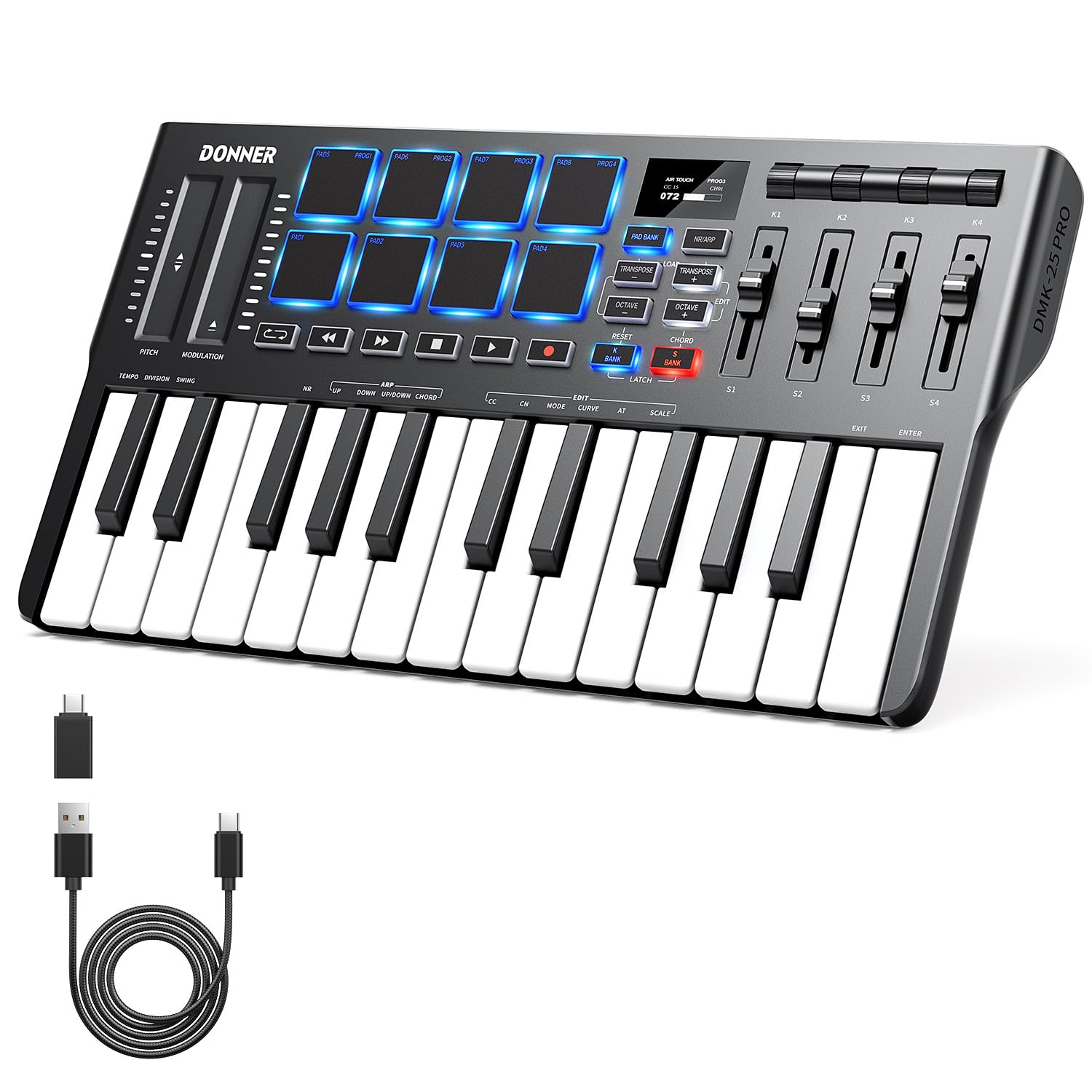
Pick the STARRYPAD for a larger assignment-focused pad surface; prefer the DMK25 Pro if mini keys and keyboard-based composition controls matter more. Both require DAW software to make sound.
- The DMK25 Pro combines mini keys with eight drum pads and adds scale, arpeggio, note-repeat, and chord functions for keyboard-led composition.
- The STARRYPAD centers on assignable pads for triggering drums, samples, and effects, with DAW software needed to hear its output.
Computer Recording MIDI Controllers alternative
400+ ratings
Read Amazon ReviewsDonner N-32 MIDI Keyboard
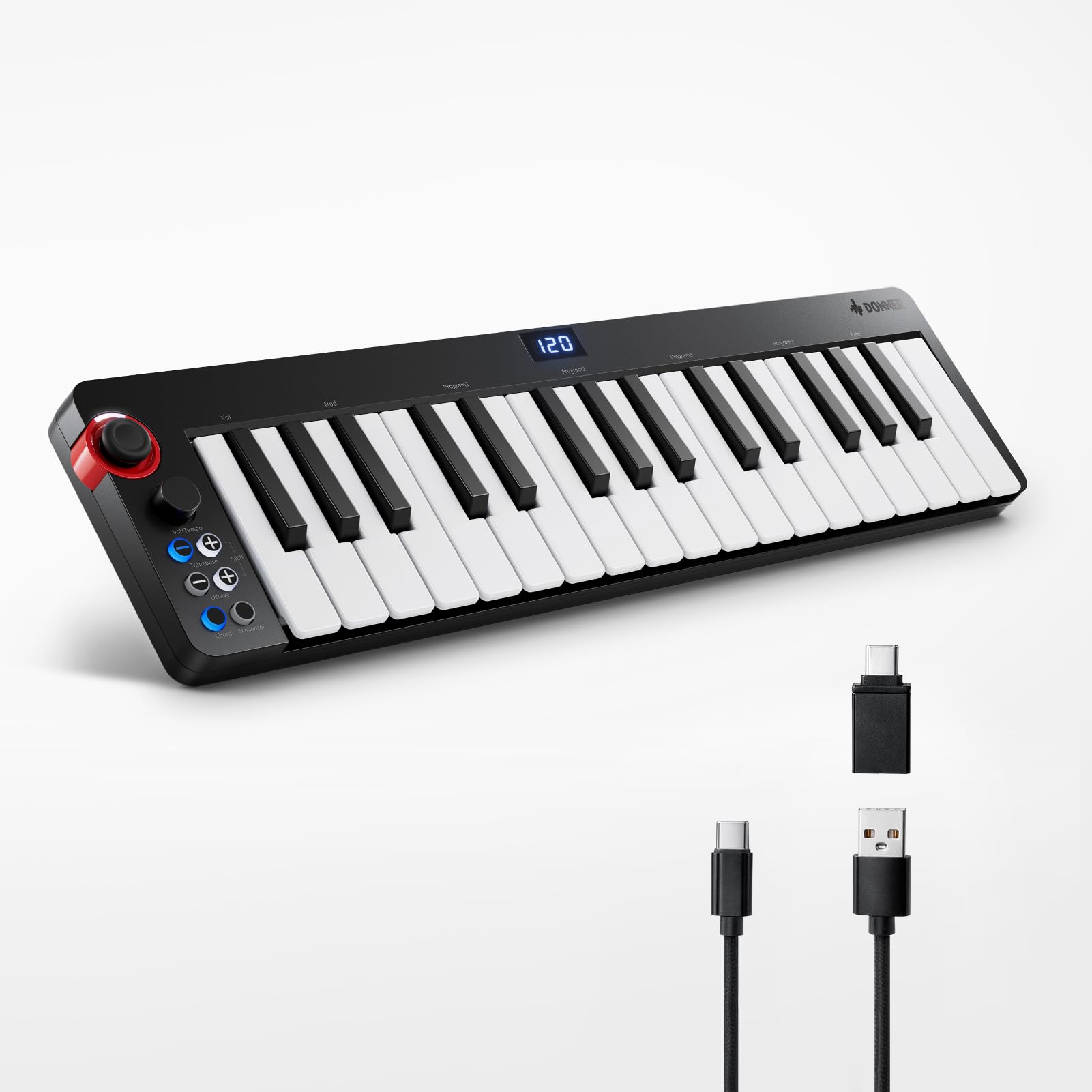
Choose the STARRYPAD for hands-on drum and sample triggering; choose the N-32 when velocity-sensitive keys and sequencer or chord-arpeggiator tools better suit your writing process. Both are MIDI controllers that need DAW software to produce sound.
- The N-32 is a keyboard controller with 32 velocity-sensitive keys, a sequencer, and chord-arpeggiator features, making it oriented toward playing notes and composing from keys.
- The STARRYPAD offers assignable trigger pads, plus faders, knobs, and buttons for customized virtual-instrument control.
Is Donner STARRYPAD Worth It?
The Donner STARRYPAD is worth considering for DAW-based beat makers who want a dedicated pad controller with flexible assignments and extra hands-on controls.
Its velocity curves, bank switching, and Tap Tempo support a workflow centered on rhythm and sample triggering.
Buy it when pads are the priority and your setup already includes DAW software; pass if you expect standalone sound or primarily want to play notes on a keyboard.
The bundled courses and Cubase LE are useful extras, but they do not change the controller's DAW-dependent role.
Your review at a glance
400+ ratings
Read Amazon ReviewsDonner STARRYPAD
A pad-focused MIDI controller for producers who want assignable triggers, hands-on controls, and a DAW-based workflow.
- Sixteen soft silicone backlit pads trigger drums, samples, effects, and more.
- Three switchable pad banks provide 48 assignable pads.
- Adjustable velocity sensitivity curves tailor pad response.
- Two faders, two knobs, three buttons, and a Shift key add customizable control layers.